
America, exhausted and broken – Tehran Times
TEHRAN – The second Trump administration has released a 33-page National Security Strategy document, unveiled under the “America First” banner and centered on redefining Washington’s role in the world. The text explicitly states that the United States no longer wishes to serve as the global policeman and is abandoning the broad military interventions, regime-change operations,

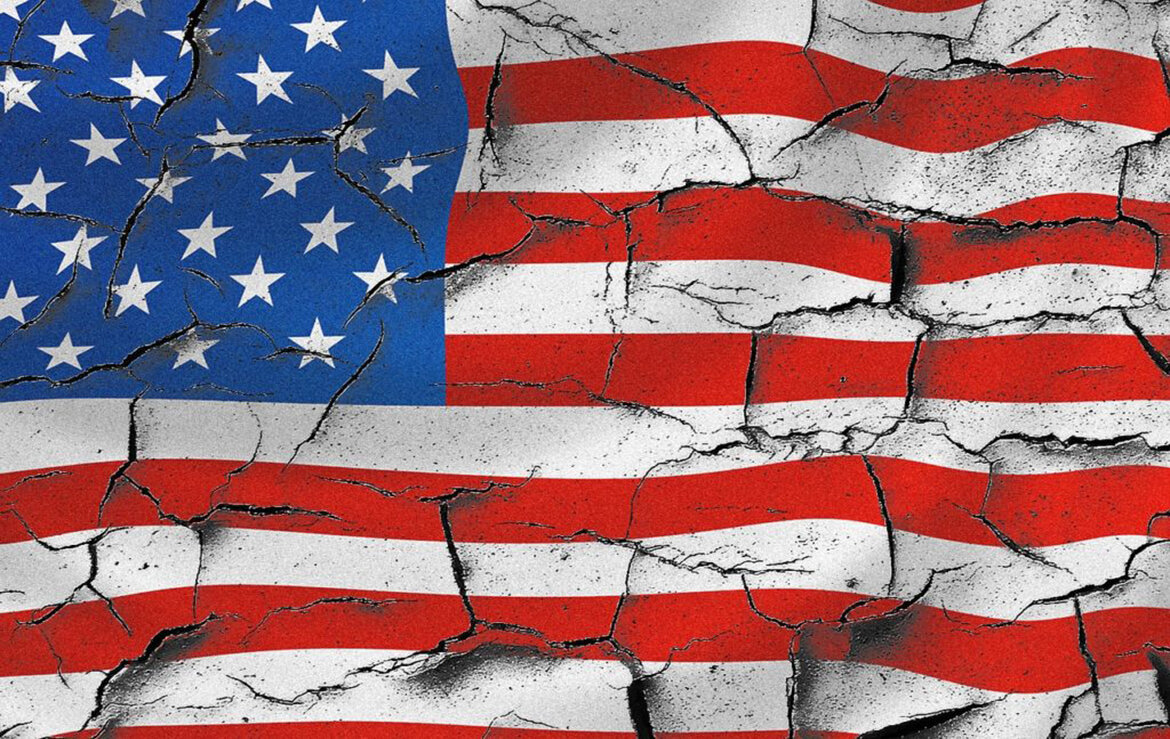
TEHRAN – The second Trump administration has released a 33-page National Security Strategy document, unveiled under the “America First” banner and centered on redefining Washington’s role in the world.
The text explicitly states that the United States no longer wishes to serve as the global policeman and is abandoning the broad military interventions, regime-change operations, and regional-order engineering of the past.
At first glance, this shift appears to be a return to realism; yet, upon closer inspection, it reveals the erosion of American power and the structural constraints now binding the country on the international stage.
Over the past two decades, Washington has suffered successive defeats in Afghanistan, Iraq, Libya, and across West Asia as a whole, squandering several trillion dollars in economic and human capital.
The twenty-year war in Afghanistan—launched with pledges of stability and democracy—ended in a withdrawal that produced no meaningful gains.
These repeated setbacks have inflicted colossal economic, political, and social costs on the United States while deepening domestic divisions.
The document portrays today’s world as a landscape of threats rather than opportunities, insisting that Washington must now prioritize the defense of its homeland and borders, the revival of industry and technology, and the protection of core national interests.
This posture is fundamentally defensive and inward-looking, signaling that the United States can no longer sustain the role of unrivalled global hegemon.
Crises such as the 2008 financial collapse, soaring public debt, the hollowing-out of the middle class, and rampant inequality reveal that America has failed not only abroad but has also undermined the domestic foundations of its own power.
The strategic competition with China and Russia—highlighted in the document as the principal challenge—has in reality exposed Washington’s inability to prevail.
Even in Europe, longstanding allies are exhausted and mired in their own economic and political troubles; American demands for higher military spending are straining historic ties.
The Ukraine crisis is a stark illustration: Washington cannot exert direct, decisive control, and Europe is steadily shouldering more of its own security burden.
In the Western Hemisphere, the document calls for curbing external influence from China and Russia, yet the hard truth is that America’s depleted economic and diplomatic leverage allows only partial management, not outright dominance.
In West Asia, the shrinkage of U.S. ambitions is unmistakable. Support for Israel and the safeguarding of energy corridors are now the sole priorities; neither the capacity nor the will remains for sweeping interventions in Syria or Iraq, let alone for containing Iran.
Two decades of regional defeats, coupled with the emergence of independent actors, have stripped Washington of its former ability to dictate the regional order.
Troop drawdowns and the offloading of responsibilities onto regional partners such as Saudi Arabia and the Emirates are tangible symbols of waning hegemony—a reality the new strategy openly concedes.
The picture that emerges is of an America that has stepped back from global management and now sees concentration on domestic renewal and narrow national interests as its only viable path.
Industrial revival, border security, and economic resilience are presented less as tools for sustaining primacy than as desperate measures to arrest internal decay.
This slow-motion retreat—compounded by battlefield failures, the inability to check China and Russia, and mounting domestic crises—marks the arrival of an era in which the United States cannot project power globally without paying an exorbitant price.
In essence, the National Security Strategy of Trump’s second term signals a profound reorientation of American foreign policy: a nation that can no longer play world policeman and is therefore pivoting toward hard power, resource control, technological edge, and domestic economic reconstruction simply to retain a fraction of its previous stature.
The document lays bare American frailty in both Europe and Latin America—an exhausted and fading Europe as partner, a Latin America that demands tighter direct oversight.
The document’s underlying message is an implicit acknowledgement of the decline of American unipolarity: a country that can no longer shape the global order without paying a heavy price and is therefore forced to choose between domestic strength and global presence.
Prioritizing homeland security, downgrading West Asia, sidelining Europe, refocusing on the Western Hemisphere, and engaging China only selectively—all these unmistakably point to the erosion of Washington’s hegemonic dominance and the world’s steady transition to multipolarity.
It should not be overlooked, of course, that certain circles of power and wealth in the United States, as well as Israel itself, are far from enthusiastic about such an approach.
Their profits and interests lie in dragging the United States into military and security interventions around the world. The Zionist influence over Trump’s decisions is so extensive that some analysts say his operational strategic slogan is: America First—after Israel!
Source: Sedaye Iran, the online newspaper of the Institute of the Islamic Revolution of Iran — December 6, 2025